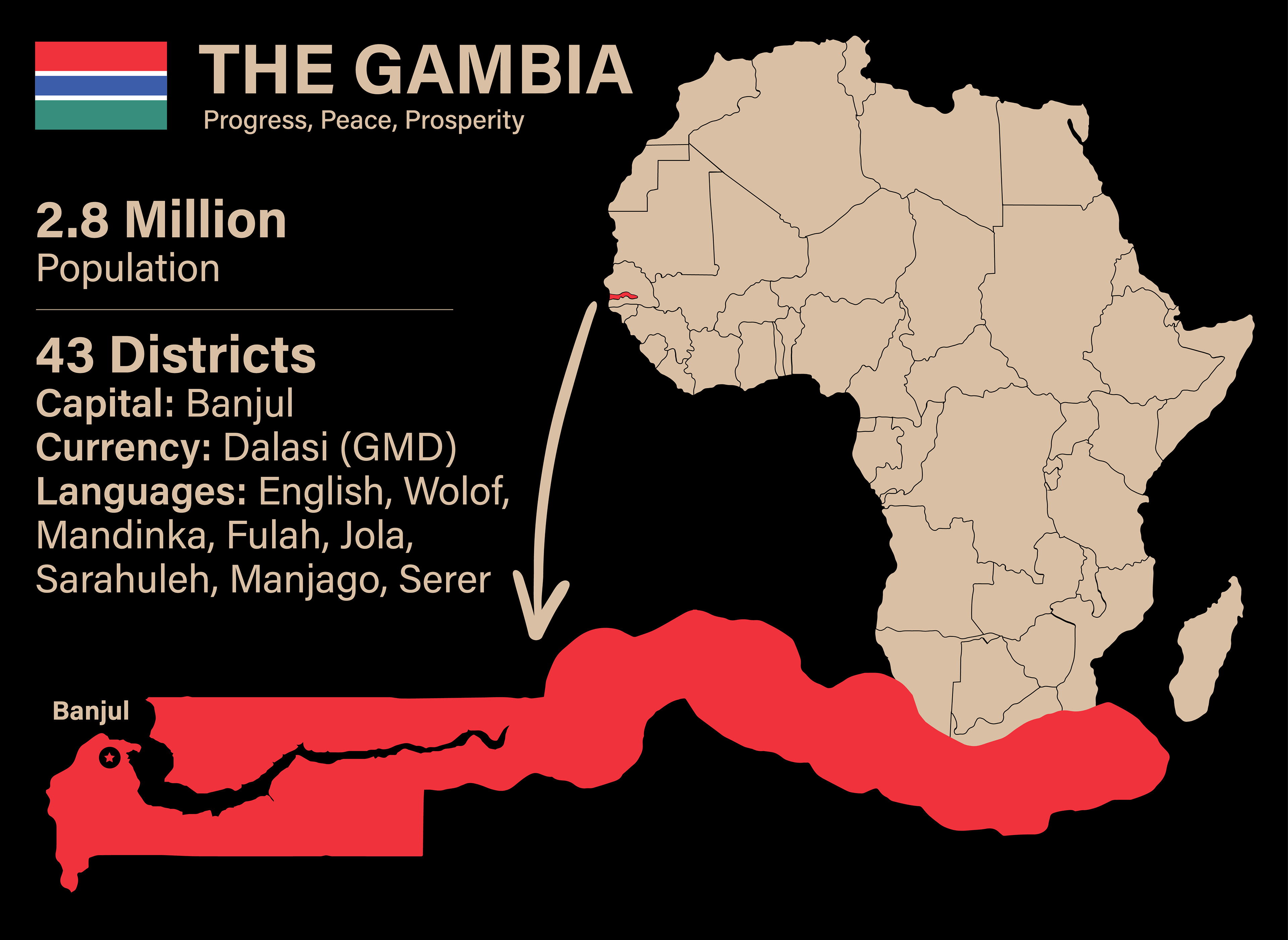
The Gambia is the smallest country on mainland Africa, almost entirely surrounded by Senegal, with a narrow stretch of coastline along the Atlantic Ocean. Despite its modest size, it has a rich and complex history shaped by ancient empires, colonial domination, independence, and political transformation.
In the early Middle Ages, the area now known as The Gambia was part of powerful West African kingdoms such as Ghana and Mali. The Gambia River served as a vital trade route for goods like gold, salt, and later, enslaved people. European interest in the region began in the 15th century with the Portuguese, followed by the British, who eventually established The Gambia as a colony. The transatlantic slave trade left a deep scar on the region, with countless people captured along the river and shipped across the ocean in brutal conditions.
The Gambia is a land of contrasts, marked by both hardship and resilience, with a rich cultural heritage and a growing desire for reform. Its future depends on creating inclusive opportunities through education, justice, and sustainable development.
© 2026 miuara.org